
Root Canal Treatment – Derby, KS
Repair the Underlying Cause of Your Toothache
If you have a severe or persistent throbbing in one of your teeth, there’s a chance bacteria may have penetrated and infected the tender nerves and pulp inside. Fortunately, Dr. Clark and the rest of our team in Derby can repair the underlying cause of your toothache with a root canal procedure.
It’s natural to have questions about what to expect from this service before proceeding. Continue reading to learn more about what happens during root canals, and please don’t hesitate to call our office if you require a same-day emergency visit.

Why Choose Illuminate Family Dentistry for Root Canal Treatment?
- Active Member of the American Dental Association
- Caring and Compassionate Approach
- Advanced Technology for Enhanced Comfort & Accuracy
Do You Need Root Canal Treatment?

Are you wondering whether getting a root canal is truly necessary? Some patients wonder whether their troublesome tooth can be fixed with a simpler solution, such as a tooth-colored filling. However, if Dr. Clark has recommended a root canal, she has likely already determined that your tooth is too injured for a filling to be effective, or that infection has developed and must be treated.
Some indicators that you might require a root canal can include:
- Extreme or prolonged sensitivity to hot and cold foods and drinks.
- Sharp pain when biting down.
- Discoloration in the affected tooth.
- Swelling or redness in the surrounding gum tissues.
- A pimple-like lump on the gums near the sore tooth.
The Root Canal Process

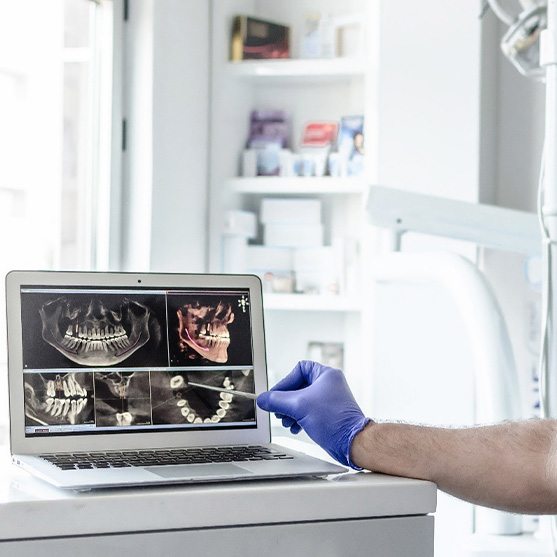
First, Dr. Clark will examine your teeth and gums and take X-rays to determine the full extent of the damage and put together an appropriate treatment plan. For instance, she’ll likely recommend a root canal followed by placing a dental crown to protect your tooth.
To begin, she’ll numb the area so that you might feel pressure while she works, but not pain. Next, she will create a small opening in your enamel to access and clear away infected pulp and other injured materials. She’ll then sanitize your tooth to remove any remaining bacteria before sealing it closed to avoid a repeat occurrence.
Finally, our team will make impressions of your mouth and send them to a digital laboratory to begin building your dental crown. We’ll likely place a temporary version to safeguard your smile until your permanent restoration arrives and can be cemented in place.
The Benefits of Getting a Root Canal
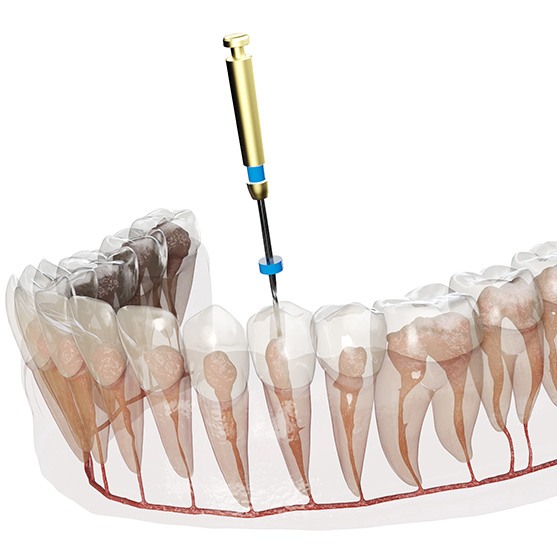
If you’re worried that your root canal will be long or agonizing, you can thankfully set your fears aside. Today, this service thankfully fixes more problems than it causes, and also provides the following benefits:
- Address toothaches. Once the infected materials are removed, you’ll enjoy some much-needed pain relief.
- Preserve your natural teeth. This option allows our team to protect your natural teeth in circumstances that might otherwise require extraction and replacement, which comes with additional risks of infection.
- Lifelike restorations. We can provide a dental crown made from resilient, tooth-colored ceramic that can be customized to match your natural enamel for beautiful results.
- Long-lasting solution. Your procedure can last potentially for the remainder of your natural life if cared for correctly.
- Easy maintenance. Brushing and flossing twice daily and visiting your dentist every six months for a routine checkup is all that’s needed to keep your troublesome tooth looking and feeling healthy.
Understanding the Cost of Root Canals
The cost of root canal treatment will not be the same for you and another patient. Each case is unique, and although you may worry that it will be too expensive, our team is here to help minimize your out-of-pocket costs. Remember, this type of treatment is essential, so you should not consider putting it off until later. Allow us to help you pursue a healthier smile that is worth the investment.
Factors That Can Affect Root Canal Cost

Different factors will ultimately determine the cost of your root canal. These might include:
- The complexity of your case: Most root canals can be completed in-house; however, if we discover that your case requires an outside specialist, we will suggest a referral.
- The type and location of the tooth: If you have a tooth located toward the back of your mouth that needs a root canal, it will likely cost more because these have more canals to clean.
- Additional dental services: There is a good chance you will need a dental crown after your root canal is complete. This will be an additional cost.
Is It Cheaper to Pull My Tooth?
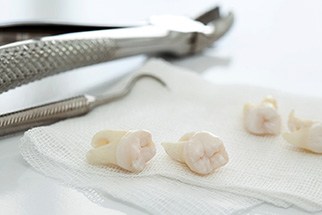
Extracting a tooth is not always the answer. Just because it is damaged or severely decayed doesn’t mean it can’t be saved. Yes, there are instances where it’s better to remove the tooth, but when your dentist suggests root canal treatment, it means that they believe your tooth can be saved.
Concerning the cost, root canals are typically a one-time procedure, so you will not have long-term recurring fees. However, if you remove the tooth, not only will you pay for the extraction procedure, but you’ll also be required to pay for its replacement and maintenance over time.
Does Dental Insurance Cover Root Canals?

Fortunately, most dental insurance companies will pay a portion of your root canal treatment. Since it is usually classified as a minor or major restorative service, they may agree to cover 50-80% of the total bill. This will significantly reduce your out-of-pocket costs, so you can budget for your upcoming procedure. If you still need assistance to understand your insurance and how much you’ll be expected to pay out of pocket, don’t hesitate to ask a member of our team.
Other Options for Making Root Canal Treatment Affordable

At Illuminate Family Dentistry, we understand that not everyone has dental insurance, which is why we offer our Illuminate+ Membership Plan. For one low monthly fee, you can gain access to preventive care, as well as discounts on additional services provided in-house.
The best part is that you can begin using your membership immediately, as there are no waiting periods, annual deductibles, yearly maximums, or pre-authorizations.
Root Canal FAQs
Are Root Canals Painful?
Many older people have a story about painful root canals, and many more have seen them on TV, but the truth is that today’s procedures are built differently. Thanks to advanced techniques and local anesthetics, most patients describe their root canal in Derby as no more uncomfortable than getting a standard filling.
Dr. Rachel H. Clark takes every precaution to keep you relaxed and pain-free during treatment. Afterward, mild tenderness is normal for a few days, but it can easily be managed with over-the-counter pain relievers, cold compresses, and a soft-food diet.
What Should I Do Before a Root Canal?
The list of tasks you’ll need to complete before your root canal is short, but each item is important. Start by going to the grocery store to stock up on soft foods for the next few days. Yogurt, soup, mashed potatoes, and fruit purees are all great, nutritious ideas.
Next, eat a healthy meal before the procedure. Since your mouth may be numb for several hours afterward, chewing can be more dangerous for your cheeks, tongue, and lips.
Taking an over-the-counter pain reliever about an hour before treatment can also help reduce post-visit soreness.
Finally, get a full night’s sleep so your immune system is at its best for healing and recovery.
How Long Does a Root Canal Take?
Depending on the severity of your infection, your root canal in Derby may take one or two appointments. In cases where two visits are needed, the first is used to place an antibacterial medicine inside the tooth, while the second completes the cleaning and sealing process.
Most procedures take 60 to 90 minutes, though more complex cases can run longer. For example, if your tooth is far back in your mouth, or if there is more than one treatment needed, the procedure can take more time. Afterward, Dr. Clark may recommend placing a custom dental crown to protect your treated tooth, which will require another visit.
Do Root Canals Ever Have to Be Redone?
While exceedingly rare, retreatments may be necessary if a tooth becomes reinfected or if bacteria enter the area during the initial procedure. Sometimes, a significant delay between the root canal and the placement of the final crown can also create issues.
If retreatment is necessary, Dr. Clark will carefully remove the filling materials, clean the canal system again, and reseal the tooth to eliminate any lingering infection. If you feel any pain lingering a few days after your procedure, be sure to let us know. By investigating quickly, we can ensure that your root canal results last for a lifetime.